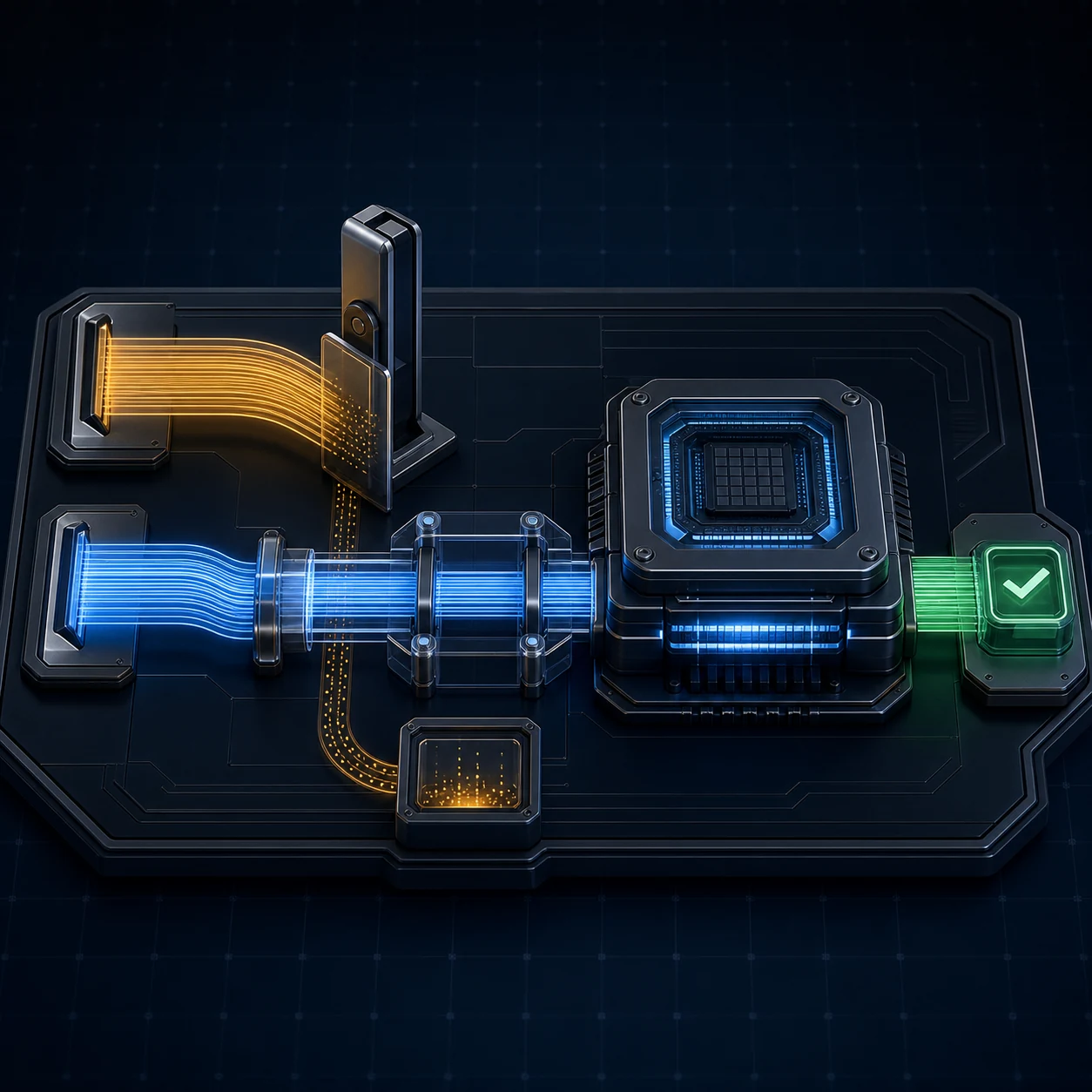
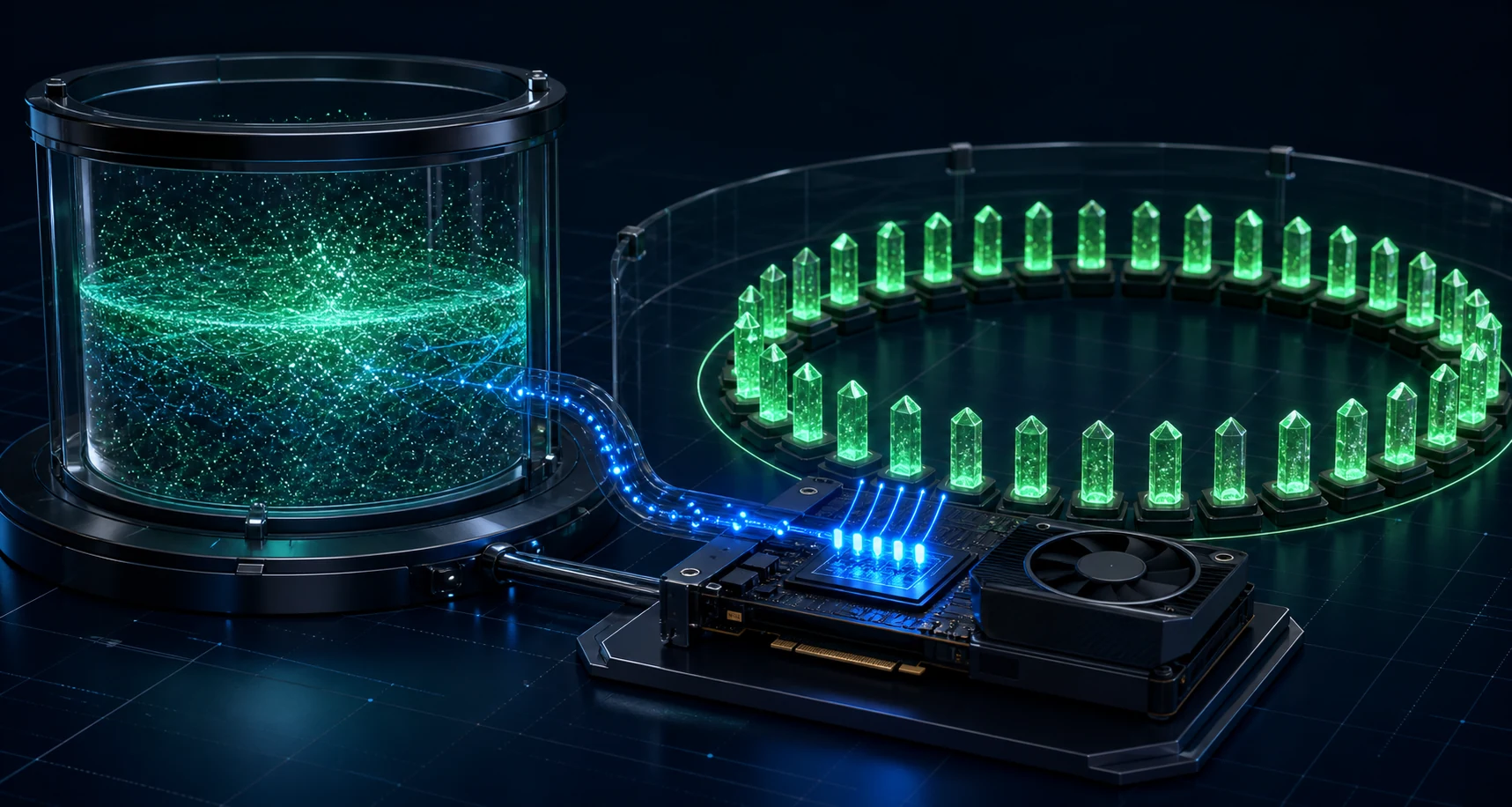
Control avoidable demand before it consumes GPU capacity.
S2 sits between AI applications and model serving. It is designed to reduce avoidable physical model calls while preserving the same model obligation: the agreed model and service requirement that must still be fulfilled.
Queue pressure can be a demand-control problem as well as a hardware-capacity problem.
01
Where the problem appears
Expensive capacity can be spent on work that creates no new outcome.
A logical request is a service obligation presented by an application. Conventional serving can turn every logical request into a fresh physical model call. That can raise queues, latency, cost and GPU-board energy—the energy measured at the GPU device boundary—when demand contains avoidable work.
S2 is relevant only where recoverable demand exists and the same quality and service obligation can still be met.
AI infrastructure teams
Visible problem
GPU demand is rising faster than available headroom.
Desired outcome
Evidence for capacity planning before expansion.
Why assess S2
An assessment can test whether avoidable model calls contribute to the pressure.
Enterprise inference platforms
Visible problem
Shared serving creates retries, concurrency and unpredictable queues.
Desired outcome
More stable service from the installed estate.
Why assess S2
S2 can be evaluated at the boundary between application demand and model serving.
Agent and workflow systems
Visible problem
Long-running work can become obsolete as the workflow changes.
Desired outcome
Less capacity spent on outcomes that are no longer useful.
Why assess S2
An assessment can identify whether obsolete or repeated work is observable without exposing workflows publicly.
Internal AI services
Visible problem
Different teams generate repeated or substantially equivalent demand.
Desired outcome
A governed capacity layer with evidence for platform owners.
Why assess S2
S2 may help where the same accepted outcome can safely satisfy more than one obligation.
Capacity-constrained GPU environments
Visible problem
Queues and latency rise while new accelerators are difficult or costly to add.
Desired outcome
A tested software option before hardware procurement.
Why assess S2
An assessment can compare native service with S2 under agreed quality and service requirements.
02
Workload fit
Is S2 relevant to your AI workload?
S2 may be relevant where repeated, simultaneous or obsolete demand consumes capacity, where queues rise during spikes, or where teams need evidence before expanding the GPU estate.
Frequent retriesRepeated or substantially equivalent requestsSimultaneous demand for the same outcomeAgent work that becomes obsoleteQueue pressure during spikesGPU expansion under considerationA need to evidence physical-call reduction
Honest limitation Workloads composed almost entirely of unique, necessary requests may contain less recoverable capacity.
Five-minute fit check
Which workload conditions do you recognise?
Select the conditions you can observe, then choose the description that best reflects your evidence. S2 does not calculate or store a technical score here.
0 of 6 conditions selected
Choose a description to complete the self-assessment.This is a qualitative prompt, not a technical assessment or savings estimate.
Weak-fit conditions
When S2 may not be the right next step
A no-go conclusion is a valid assessment outcome. It prevents a weak or unmeasurable workload from becoming an unjustified pilot.
Nearly all requests are unique and necessary.
An acceptable output cannot be defined.
Capacity, latency or queue pressure cannot be measured.
A stable native baseline cannot be established.
Workload or tenant boundaries are unclear.
A controlled comparison cannot be performed.
The operating problem is unrelated to inference demand.
This is a black-box view of S2 outcomes. Detailed technical information is shared only through an appropriate confidential engagement.
01
Demand reaches the boundary
Application demand reaches S2 before required work is passed to the existing model-serving environment.
02
Required work is forwarded
A request that still needs fresh model execution continues to the agreed model and service requirement.
03
Eligible demand is controlled
Avoidable work may be controlled only when the service obligation can still be met within the agreed boundary.
04
Outcomes remain quality-gated
A delivered outcome counts as useful service only when it passes the agreed quality and service requirements.
05
Service and execution are measured
Logical requests, fresh physical model calls and service stability remain visible for evidence.
06
Unsafe optimisation fails open
When an optimisation cannot be applied safely or is unavailable, required work is forwarded.
01R
Repeated demand
Accepted result reuse
A previously accepted outcome can satisfy eligible repeated demand without another physical model call.
021
Simultaneous demand
Shared generation
Eligible simultaneous demand can share one generation while each delivered outcome remains quality-gated.
03X
No longer useful demand
Obsolete work control
Eligible work that can no longer create value may be prevented from consuming further capacity.
04>
New and required demand
Forwarded work
Requests that still require model service continue to the same model obligation and quality requirements.
Operational safeguard
Fail open means required work is forwarded when an S2 optimisation cannot be used safely or is unavailable.
Fail open
04
Operational and commercial value
Find useful capacity before buying more infrastructure.
The assessment asks a practical question: can this workload serve more quality-accepted demand while reducing avoidable physical model calls and keeping service stable?
Recover service headroom from suitable demand patterns.Measure GPU-board energy per accepted outcome.
01
Recover useful capacity
Serve more quality-accepted logical demand from the same installed GPUs when the workload contains recoverable work.
02
Reduce physical model calls
Separate accepted service outcomes from the number of fresh model calls required to produce them.
03
Protect queues and latency
Reduce avoidable contention before it reaches accelerator capacity during periods of pressure.
04
Make expansion evidence-led
Assess recoverable capacity before committing to more accelerator infrastructure.
Decisions an assessment can support
Measure the constraint before choosing the response.
Diagnose the pressure
Test whether avoidable demand contributes to the observed capacity or queue constraint.
Evaluate software first
Decide whether recoverable demand should be tested before additional GPU capacity is committed.
Measure installed headroom
Determine whether the existing estate could support more quality-accepted service under agreed conditions.
Protect service stability
Evaluate whether avoidable contention can be reduced while quality, latency and queue requirements remain in force.
Support procurement
Give a hardware decision an explicit native baseline, workload boundary and evidence standard.
Stop when the fit is weak
Conclude that a pilot is not justified when the workload contains too little recoverable demand or cannot be measured credibly.
S2 supplies measured technical boundaries. Customer-specific financial assumptions, procurement economics and deployment approval remain with the customer.
The published A100 and laptop results apply only to their separate completed test boundaries. They are not pooled. Actual value depends on workload characteristics, model behaviour, service constraints and deployment conditions.
Move from fit to evidence
Recognise the pattern. Assess it honestly.
Begin with non-sensitive workload characteristics and an explicit operating constraint.